










Hello.
Arkansas Children's Hospital
General Information 501-364-1100
Arkansas Children's Northwest
General Information 479-725-6800


Allergy patient and study participant, Tucker Phillips
Expanded Pediatric Clinical Research Unit Will Accelerate Breakthroughs in Child Health
Published date: February 26, 2026
Thanks to the $371 million expansion at Arkansas Children’s, researchers with the Arkansas Children’s Research Institute (ACRI) are imagining and building what’s next in revolutionizing medicine: an expanded and dedicated Pediatric Clinical Research Unit (PCRU).
Opening in mid-2026, the expanded PCRU, a specialized area for conducting research studies with children, will be located on the second floor of the three-level Champions Pavilion, a 157,916-square-foot outpatient care facility under construction south of 10th Street on the Arkansas Children’s Hospital (ACH) campus in Little Rock. The new PCRU will offer a modern, child-friendly space that will allow more children to be included in research and benefit from the newest medical treatments available.
“The Arkansas Children’s vision statement has been updated to include the word ‘discovered,’ reflecting our commitment to innovation and advanced care. It now states, ‘Unprecedented child health. Defined, discovered, delivered.’ This expanded PCRU embodies that spirit of discovery,” said Megan Gorski, director of clinical research operations for ACRI. “What’s the next breakthrough in research? The next treatment, clinical approach, strategy, therapeutic or technology? Every study we conduct has the potential to transform pediatric health care — not only in Arkansas but globally due to the impact of our work that reaches around the world. By creating an advanced, dedicated space for research, we are positioning ourselves to make those discoveries happen.”
What is Pediatric Clinical Research?
A pediatric clinical research study, which requires consent from the patient and the patient’s parents or caregivers, aims to discover and investigate new treatment options, prevention strategies and disease detection methods while expanding understanding of diagnoses and disease mechanisms in children. There are many kinds of research studies, and each one helps researchers learn new ways to keep children healthy and improve their care.“Some studies are observational. For example, a patient may simply attend a regular doctor’s visit and we collect data from their chart to learn more about that population. If blood is already being drawn, we might request that we take a small amount of blood at the same time to study disease processes,” Gorski said. “Or during surgery or a biopsy, we may collect an extra piece of tissue to better understand cellular activity or search for new disease processes. Our research ranges from basic observational studies to interventional clinical trials, where we actively test new treatments and measure outcomes. That could mean introducing a new medication for a specific condition, evaluating a new medical device or implementing behavioral, educational or diet-related interventions.”
Throughout the Arkansas Children’s Health System, which includes two hospital campuses and five clinics, ACRI manages over 330 research studies, with approximately 70 percent classified as interventional clinical trials.
In 2025, the PCRU saw over 600 unique patients and completed more than 1,800 visits. Study teams in the PCRU see, on average, about 40 study participants weekly.
Tamara T. Perry, M.D., FAAAAI, interim president of ACRI and senior vice president and chief research officer at Arkansas Children’s and professor of pediatrics at the University of Arkansas for Medical Sciences (UAMS), said study participants embody the life-changing impact of clinical research.
“We are deeply grateful to the children and families who choose to participate. Their generosity helps lead to new discoveries and improves care for children today and in the future,” Dr. Perry said.
New Pediatric Clinical Research Unit
 A PCRU provides space for patients to participate in Arkansas Children’s research as outpatients, with some visits lasting several hours. The current 4,000-square-foot PCRU, located on the second floor of ACH’s main building, has two private rooms and four open bays. In addition to Gorski, the team includes a manager of clinical research nursing, six nurses, three research pharmacists and many active researchers and their staff.
The new PCRU will be an extensive, dedicated floor designed as a “one-stop shop” for research visits, Gorski said.
Key highlights of the new PCRU include:
- 14,000 square feet,
- 16 private treatment rooms, providing greater flexibility and improved scheduling,
- All essential services in one place, including a phlebotomy room (used for drawing blood), lab, pharmacy and a kitchen,
- More storage space for equipment and supplies,
- And additional workspaces for team members and research investigators.
The PCRU is home to studies from a wide range of sponsors and funding sources that investigators partner with to advance science and discovery. Federal grants from the National Institutes of Health (NIH) and other governmental agencies and medical consortia provide an important pathway for collaborations and state-of-the-art research between investigators at Arkansas Children’s and other researchers across the country. A growing number of studies within the PCRU are multi-center, industry-sponsored collaborative studies, including private biotech and pharmaceutical companies and national foundation sponsors committed to advancing health care and new treatment options for children.
 Research investigators who follow strict ethical and safety guidelines to protect participants and their families lead each study.
In addition to more rooms, there are notable advancements within the private rooms. Two rooms will include a one-way mirror for neurocognitive testing and behavioral assessments related to conditions such as autism. It allows researchers to observe either inside or outside the room.
The PCRU will also have four negative-pressure rooms, specially designed to prevent air from escaping, equipped with advanced infection-control for studies that involve infectious diseases, investigational medicines that alter a participant’s immune response or aerosol-inducing procedures, such as a pulmonary function test.
“These specialized rooms allow us to perform more procedures within the PCRU,” Gorski said. “For example, Duchenne Muscular Dystrophy (DMD) and Cystic Fibrosis (CF) studies often require pulmonary function testing. Having these capabilities in one space means patients won’t have to move between the PCRU and other clinical areas for additional testing.”
Gorski added that PCRU researchers will continue to collaborate with other hospital departments for tests unavailable within the PCRU, including radiology and certain cardiology assessments.
Groundbreaking work
Research conducted in the PCRU spans multiple specialties, including neurology and allergy, with a specialized focus on DMD and food allergies.
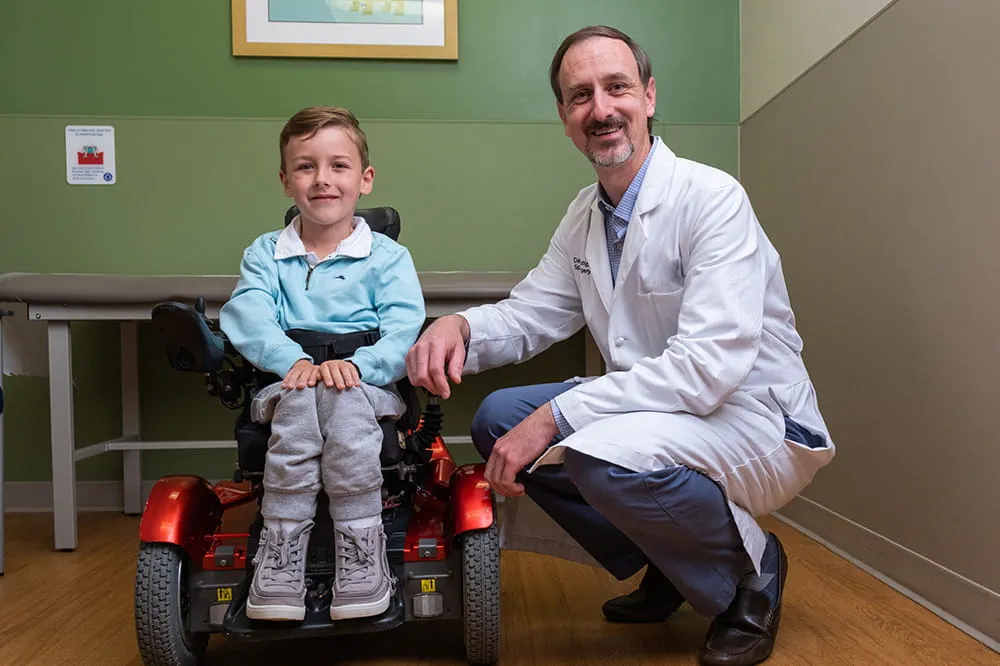
Aravindhan Veerapandiyan, M.D., known as “Dr. Panda,” serves as a lead principal investigator for ongoing DMD trials. He is a pediatric neurologist at ACH, an associate professor of pediatrics at UAMS and a researcher at ACRI. Since joining Arkansas Children’s in 2018, Dr. Panda has been the principal investigator for over 25 clinical studies, treating more than 100 patients with muscular dystrophies.
DMD is the most common muscular dystrophy in children, primarily affecting boys. An estimated 15,000 boys in the United States and 300,000 worldwide live with DMD, a progressive neuromuscular disorder with no cure.
Dr. Panda’s trials, including new techniques for administering gene therapy that have not been attempted anywhere else in the world, have advanced scientific understanding and treatments aimed at prolonging the lives and improving the quality of life for patients with DMD.
“Our accomplishments in DMD research speak volumes about the expertise, dedication and collaboration of our teams. It truly exemplifies what it means to integrate research into clinical care and how our collective efforts aim to transform lives,” Dr. Panda said.
With patients traveling from all over the world to participate in DMD clinical trials at ACH, Dr. Panda said the dedicated PCRU space will take his research to a new level of innovation.
“The expanded PCRU allows us to accelerate everything we do. As our research volume grows, we can now bring next-generation innovative therapies to more patients across Arkansas and far beyond — reaching children globally with treatments sooner than ever before,” Dr. Panda said. “The state-of-the-art, family-centered environment reduces barriers to participation and creates the ideal space for innovation. This expansion doesn’t just strengthen our research — it positions Arkansas Children’s to change what’s possible for children everywhere.”
Stacie Jones, M.D., a pediatric allergist-immunologist and director of the food allergy program at ACRI and professor of pediatrics at UAMS, is a principal investigator for allergy studies. The Arkansas Children’s Food Allergy Program has a diverse portfolio of multi-center collaborations and investigator-initiated clinical trials focused on developing new therapeutics, defining biomarkers of disease and identifying targets for food allergy prevention. In the 30 years that Dr. Jones has worked at ACRI, the allergy program has been a leading center in the U.S. and internationally for advancing discovery and new therapies for children and adults with food allergy, including being an inaugural member of the NIH-funded Consortium for Food Allergy Research since its inception in 2005. Dr. Jones and her team have conducted over 100 clinical trials and studies, including developing oral immunotherapy for peanut allergy along with collaborators at Duke University in Durham, N.C. This work led to the first approved medication for the treatment of food allergy in the U.S. She co-chaired the NIH-funded IMPACT trial in 2022, where ACRI was one of five U.S. centers involved. The trial provided peanut oral immunotherapy, given to children aged 1 to 3 who were highly allergic to peanuts. As a result of the treatment, most participants were desensitized to peanuts and protected from life-threatening allergic reactions, and one-fifth of the 143 children were cured of peanut allergy.
The long-term NIH-funded SUNBEAM study, the first birth cohort (a group of children enrolled and studied from birth) focused on prevention of food allergy and atopic dermatitis, will also benefit from the expanded PCRU as a welcoming research space for families and the more than 200 child study participants, who will be followed until they reach 6.
“This incredible new research unit will allow us to bring more clinical trials to more patients across an ever-expanding field of atopic diseases, including our foundational program in food allergy (treatment and prevention), eosinophilic gastrointestinal disorders and asthma. It will provide an opportunity to expand our work to include disorders such as atopic dermatitis, drug allergy and other allergic/immunologic diseases,” Dr. Jones said. “We are excited to bring our allergy and immunology program to this state-of-the-art new facility. Our team is committed to being difference-makers for patients in Arkansas and beyond.”
* This article was written by the Arkansas Children’s content team and medically reviewed by Tamara Perry, M.D., Stacie Jones, M.D., Aravindhan Veerapandiyan, M.D., Megan Gorski and Veronica Smith.
Study Participant Experience
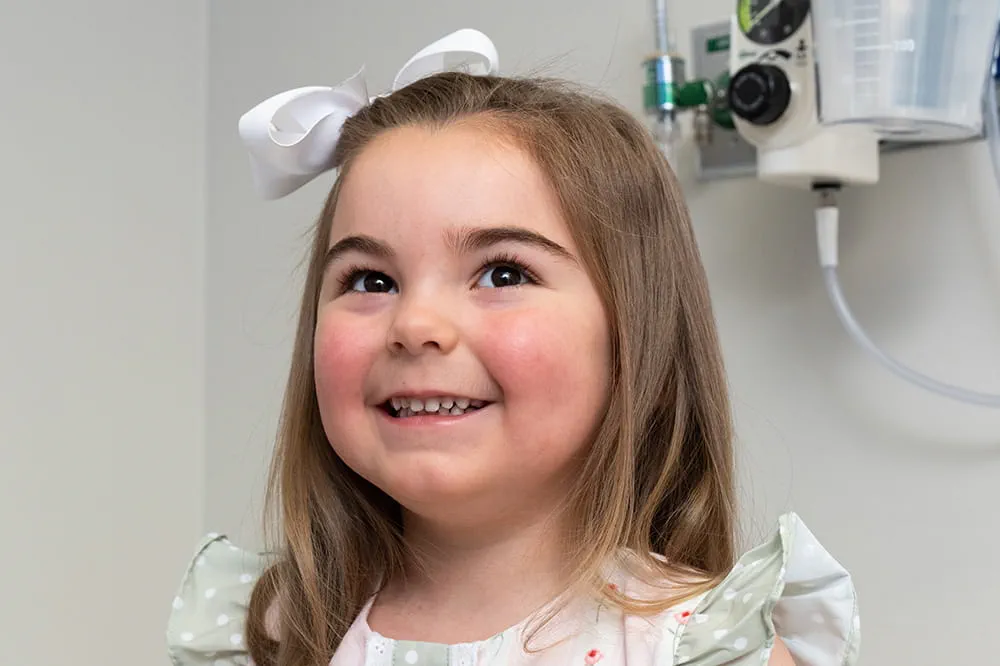
A couple of months after his first birthday, Tucker Phillips, of Conway, tried peanut butter for the first time. His life changed forever.
“We were at my parents around Christmas. We fed him peanut butter, and he started to react with itchy, watery eyes. Luckily, it wasn’t an anaphylactic reaction. That was when the journey began,” his mom, Beth Phillips, said.
Now 15, Tucker has spent a lifetime managing his peanut allergy, from rarely eating at restaurants to avoiding food while hanging out with friends. His mother noted his allergy is “extreme,” which led them to participate in the PEPITES Trial, a research study at Arkansas Children's from 2016 to 2020. Conducted in 31 centers internationally and led by Dr. Jones at ACRI, the PEPITES Trial investigated the use of a peanut patch to treat children with a peanut allergy and involved close monitoring and regular follow-up visits for four years. The PEPITES Trial was an early groundbreaking study that paved the way for this treatment getting closer to Food and Drug Administration approval. Dr. Jones credits patients like Tucker and his mother for their dedication and commitment to the discovery process as “the critical link and the only way that advancements in new treatments can occur.”
“We loved it. That was our first interaction with Dr. Jones, who is a world-renowned expert in allergy research. She taught us all about peanut allergies. He had seen a different allergist before the study, and we didn’t receive much education beyond routine care. Arkansas Children's educates us on what we can do better and what we can do differently. A nutritionist will visit to discuss our options with us, and Dr. Jones is always quick to respond to our questions. We still see her to this day,” Beth said. “We've been so impressed by Arkansas Children's from the beginning. Research was a fun experience for him. Tucker would always bring this stuffed bear named Collin with him. I recently ran into one of his nurses from the study who remembered him and his bear’s name almost 10 years later. That says a lot about the nurses and the level of care.”
Tucker said he was “always excited to go” to Arkansas Children’s for his research appointments, sometimes lasting six to eight hours.
“I would get out of school and hang out with a bunch of people all day. I would play board games with them,” he said. “Every time I got a shot or blood drawn, I got to pick out a toy to keep. I'd look forward to that.”
The family hopes to participate in an upcoming trial at the new PCRU.
“A new, dedicated space will be more convenient for families,” Beth said. “We have encouraged Arkansas Children’s research to anyone we know who has a child with an allergy.”